

F I Z Y X   P E R S P E C T I V E

The Evolution of Artificial Intelligence

Part I:  Clues from the early U.S. railroads and the internet

Author

CEO & CIO, FIZYX Investment Group

Stay informed…

Receive our insights, analysis and views.

“What’s past is prologue”

William Shakespeare, The Tempest

INTRODUCTION

At FIZYX, the essence of our investment advantage is our ability to understand how financial patterns of the past repeat themselves over and over again and thus provide valuable insight into the patterns within the current financial landscape. Today, this historic-pattern dynamic is more relevant than ever in trying to discern the likely trajectory of the artificial intelligence (AI) industry and its impact on society and commerce, as well as in the investment arena.

SIMILAR PATTERNS FROM THE INDUSTRIAL PAST

As AI evolves, we are witnessing a progression similar to that of two foremost American industrial triumphs:

  • The golden age of U.S. railroads: 1865 through the early 20th century
  • The internet boom beginning in the 1990s

Both of these industries transformed society and the economy, but their impact was not immediate. Each unfolded in two main phases:

  • An infrastructure phase, during which the foundational networks were established
  • An ensuing application phase, which saw the emergence of transformative consumer and business uses that brought profound changes to everyday life and beyond

This document—Part I of this Perspective—recounts the development of the early railroads and the internet, the pioneering companies involved, and the great wealth amassed by these companies and their investors. It also explores general investment lessons learned from the growth of these two industries and how they might apply to the investment environment surrounding the continued development of AI.

Part II will delve further into how FIZYX plans to use its advanced analytics to capitalize on the lessons of the past to identify the key companies that may continue to shape AI’s infrastructure and applications in the years ahead.

A. THE GOLDEN AGE OF U.S. RAILROADS:  1865 – 1910s

TRANSFORMATIONAL IMPACT

From our vantage point in the 21st century, it can be difficult to appreciate just how “disruptive” the early interstate railway systems were to the status quo in the late 19th and early 20th centuries and the dramatic changes they brought—laying the groundwork for national geographic and economic expansion and connecting far-flung regions like never before.

The Early U.S. Railroads…

  • Revolutionized transportation and allowed “ordinary” people to comfortably journey far and wide at a fraction of the cost of stagecoach travel (at a time when most individuals had never traveled more than 20 miles away from home over their entire lifetime)…and enabled the business community to ship goods faster, farther, less expensively—and in greater quantities—during all four seasons of the year.
  • Elevated the country’s commerce (agricultural, industrial, and even retail) by making it possible to move food crops, cattle and raw materials from the West to the populous East and move cotton and manufactured goods from the East to the West…by stimulating the growth of logging, mining and heavy industries such as iron and steel production…and even by enabling the successful emergence of the first mail-order catalogs.
  • Helped establish the U.S. as the world’s largest market and, by the 1890s, its most powerful economy by transporting the fruits of America’s burgeoning commerce to the major port cities on both coasts for international trade.
  • Led to new population centers and westward expansion because the growing network of railway lines allowed new towns and cities to form and flourish far from waterway transportation and increased the accessibility to the western United States and other remote areas.
  • Strengthened national connectivity, information flow and coordination across regions not only by fostering the movement of people and publications from one area to another but also by building telegraph lines along the railroad rights-of-way and establishing the nation’s four standardized time zones.
  • Created great wealth and transformed society as railroad-induced economic growth and national expansion led to the creation of a prosperous middle class, as well as a new class of ultra-wealthy railroad barons and industrialists.

Given the way the early railroads connected people far and wide, and moved merchandise, raw materials and information across great distances at unprecedented speeds, it is not surprising that:

Commentators often refer to the U.S. railway system of the late 19th century as “the internet of its day.”

THE RAILROADS’ INFRASTRUCTURE PHASE: Key Industries & Companies

In the railroad industry’s early years, companies focused on establishing the foundational infrastructure. Tracks were laid, stations were built, and connections were established between major cities and industrial hubs. This infrastructure phase was highly speculative, with investors betting heavily on the transformative potential of a connected nation.

When the Civil War concluded in 1865—a conflict that the nation’s fledgling railroads helped the North win—there existed about 35,000 miles of track in the United States, primarily connecting cities in the East and Midwest. From this point on, however, the construction of railroad infrastructure accelerated—track mileage surpassed 154,000 by 1890—enabling railways to replace many canals and turnpikes, as well as steamboats during the 1870s. And, for nearly half a century no other form of transportation challenged the railroads.

There were many companies across several industries that were critical to the building and expansion of early railroad infrastructure. Notably, there were the pioneering railroad companies themselves, whose leaders envisioned the destiny of the railroads and risked great amounts of capital to bring their vision to fruition and spearhead the Golden Age.

  • The visionary railroad companies
    Some of the earlier railroad companies focused on building systems that linked key cities in the populous eastern U.S., such as the Baltimore and Ohio (B&O) and New York Central. Other railroads expanded the rail system network to the Northwest, Southwest and West Coast; these included the Union Pacific and Central Pacific railroads (which famously joined forces to create the first transcontinental railroad), as well as the Northern Pacific and the Atchison, Topeka and Santa Fe.

    Investing in railroad companies during their Golden Age offered significant opportunities for growth, as these companies not only benefited from the regional and national transportation prowess they created, but also often from government support in the form of valuable land grants and government-backed financing.

OPPORTUNITY SNAPSHOTS:

STOCK PRICE UPTRENDS

116% increase in 28 weeks
October 1900 – May 1901

4,416% increase in 197 weeks
July 1897 – June 1901

197% increase in 33 weeks
October 1900 – June 1901

Source: William O’Neil & Co. Inc.

Throughout this report, we will present these types of historical examples of companies that achieved outstanding growth of stock value related to the Golden Age of U.S. railroads, the internet boom, and the development of AI. We do not mean to imply that any particular investors of the day necessarily captured all of this growth. But rather, this historical data together with the contextual information presented in the text of this report is meant to help investors recognize certain fundamental characteristics that might indicate a company’s potential for outsize growth within the environment of an emerging or transitioning industry.

As important as the railroad companies were, insightful investors recognized the demand-based opportunities in the cases of companies supplying the metals, fuel and technology that were indispensable for building the railroads, keeping them running, and doing so efficiently and safely. 
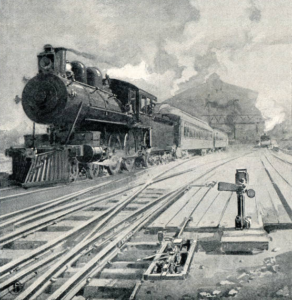
  • The backbone of the railroads: Steel
    High-quality steel from companies such as Bethlehem Steel and the Tennessee Coal, Iron and Railroad Company (TCI) was indispensable for building tracks, bridges and railcars. The resultant demand spurred the growth of major steel manufacturers during this period.

  • The power source: Coal
    Coal was the primary fuel for steam locomotives and a key driver of industrial activity. Companies that mined and/or transported coal—such as TCI (which also mined coal in addition to producing steel) and the Richmond and Danville Railroad—played a pivotal role in the railroad economy.
  • The nerve fiber: Copper
    Anaconda Copper Mining Company, one of the largest copper producers in the world, supplied this essential metal for the telegraph systems that paralleled the railroad tracks and enabled rapid communication between train stations and central hubs, ensuring efficient, coordinated operations.
  • Efficiency and safety enhancements: Railroad technology
    Companies specializing in the technologies of the day—such as New York Air Brake Company, which pioneered advances that improved the reliability of braking systems—played key roles in making railroads a safer, more efficient mode of transportation.

OPPORTUNITY SNAPSHOTS:

STOCK PRICE UPTRENDS

265% increase in 39 weeks
December 1898 –
September 1899

138% increase in 14 weeks
October 1905 –
December 1905

Source: William O’Neil & Co. Inc.

322% increase in 51 weeks
September 1898 –
September 1899

OPPORTUNITY SNAPSHOTS:

STOCK PRICE UPTRENDS

265% increase in 39 weeks
December 1898 –
September 1899

138% increase in 14 weeks
October 1905 –
December 1905

322% increase in 51 weeks
September 1898 –
September 1899

Source: William O’Neil & Co. Inc.

THE RAILROADS’ APPLICATION PHASE:  Key Industries & Companies

During the application phase, other investment opportunities emerged as companies developed innovative new railroad-related products and services—transforming industries, creating new markets and enjoying significant first-mover advantages.


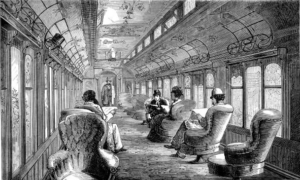
Pullman Company — Luxury Railroad Passenger Cars
Made long-distance travel more comfortable and appealing.

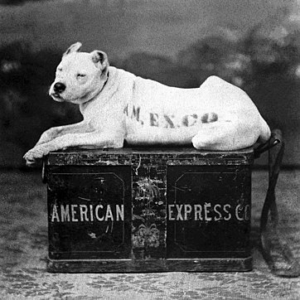
American Express — Nationwide Express Shipping
Used railroads to expand its express shipping services, facilitating nationwide commerce.

Wells Fargo — High-Security Transport
Leveraged rail routes to transport valuables and provide secure logistics.

Western Union — Telegraph Services
Built telegraph lines along the railways, enabling faster communication and long-distance financial transactions.

Fred Harvey Company — Hospitality Chain
Created a chain of well-run, well-respected hotels/restaurants that served rail travelers.

Montgomery Ward — Mail-Order Retail
Introduced America’s first mail-order catalog and shipped merchandise via railroad.

OPPORTUNITY SNAPSHOTS:

STOCK PRICE UPTREND

197% increase in 96 weeks
May 1927 – March 1929

Source: William O’Neil & Co. Inc.

As you will see next, the macro investment lessons learned from this period parallel many learned during the age of the internet.

B.  THE INTERNET BOOM:  1990s – 2000s

TRANSFORMATIONAL IMPACT

When it comes to breakthrough connectivity and societal change on an enormous scale, there is a high degree of parallelism between America’s pioneering railroads and the internet. So, there’s little wonder that, just as the early railroads are often called “the internet of their day,” the internet is often referred to as “the information superhighway.”

The internet exerts tremendous impact on society and so many facets of our daily lives…

  • How we communicate and socially interact with each other  Email has widely supplanted postal mail due to its ease-of-use and greater immediacy, and web-based apps have brought video to phone conversations. Social media platforms enable us to share our activities and opinions with a wide audience of acquaintances and others on a global scale.
  • Our 24/7 access to information and news  Websites, blog posts, search engines and online databases enable us to keep informed quickly—anywhere, any time—and allow us to explore new interests easily.
  • How we shop  Online shopping has become a major part of our shopping habits, leading to large-scale changes within the retail business community.
  • The way we bank and take care of our finances  Rather than “go to the bank,” we can now pay our bills, do much of our banking, and take care of other financial matters digitally online.
  • How business is done  The internet allows entrepreneurs to create start-up businesses with global reach and has made it possible for many employees to perform their work remotely from almost anywhere. “Virtual” meetings can be held online, saving travel time and money.
  • Our limitless access to entertainment  We can now go to the movies at home by using on-demand streaming services. What’s more, online gaming has become a significant pastime and industry.
  • How we learn  The internet can bring school into our homes via virtual classrooms and interactive learning platforms.
  • Our ability to access medical attention  Patients can access substantial troves of medical information on the web as well as set up virtual telehealth appointments to visit and interact with their doctors online.
  • And, apps for almost everything  There are multitudes of online applications that help us handle everything from calculating mortgage costs and planning/booking travel, to checking on our homes while we’re away, and so on.

Much like the railroad era, the internet revolution unfolded in two distinct phases: an infrastructure phase, during which the key technologies were developed and the foundational networks were built, and an application phase, where transformative consumer and business uses emerged.

THE INTERNET’S INFRASTRUCTURE PHASE:  Key Industries & Companies

As with the early railroads, the internet’s infrastructure was developed and extended over several decades.  In fact, a forerunner linked the computers of several universities in the late 1960s.  But it wasn’t until 1994 to 1996 that the internet transitioned from a scientific and governmental research network to the type of commercial and consumer marketplace we know today.

The internet revolution in the late twentieth century was marked by a race to build out the infrastructure—networks consisting of many, many physical devices linked together (largely by fiber-optic cable), including routers, cellular towers, various types of servers, internet exchange points, data centers and computers.

As the infrastructure was taking shape, some investors who had the right outlook and analytic tools were able to recognize attractive opportunities.  As in the early railroad era, these opportunities centered around companies that produced components indispensable for building the infrastructure—in this case, advanced processor chips, hardware, software, and fiber optic materials that made connectivity and data transmission possible on this global information highway.

  • The brains of the internet:  Silicon and semiconductors
    Intel Corporation, the dominant player in semiconductor production, provided the key semiconductor components for the devices—from computers to processers—driving the infrastructure that supports the web.
  • The arteries for data:  Networking and connectivity components
    Cisco Systems provided routers, switches, and networking hardware that enabled data to flow seamlessly across the web, connecting businesses, homes, and data centers.  Lucent Technologies, a leader in telecommunications equipment, developed technologies and other innovations that increased bandwidth and speed for internet fiber-optic users.
  • The backbone of global connectivity:  Fiber optics
    Corning Inc. pioneered fiber-optic cables for high-speed data transmission over long distances—a vital component for building the physical backbone of the internet.
  • Consumer access:  Bridging the last mile
    Netscape Communications developed one of the first widely adopted web browsers, making the internet accessible to everyday users and setting the stage for mass adoption.  America Online brought the internet to millions of households, popularizing dial-up access and introducing users to email, chatrooms, and early online communities.

OPPORTUNITY SNAPSHOTS:

STOCK PRICE UPTRENDS

494% increase in 135 weeks
January 1995 – August 1997

3,900% increase in 60 months
March 1995 – March 2000

449% increase in 68 weeks
December 1998 – March 2000

Source: William O’Neil & Co. Inc.

THE INTERNET’S APPLICATION PHASE:  Key Industries & Companies

Once the internet’s infrastructure was established, companies leveraged it to create applications that have transformed society. This phase saw the rise of businesses that flourished as they developed tools and services that reshaped industries, commerce and people’s lives…and made their brands household names.

Amazon — E-Commerce Revolution
Used the internet to create a scalable e-commerce platform that transformed retail by offering a vast selection of products, competitive pricing, and convenient delivery.

Google — Search and Information Access
Google’s search engine became the gateway to the internet by organizing the vast web of information into an easily navigable format. Its dominance in search established it as a key player in the digital economy.

Meta — Social Connectivity
Initially known as Facebook, Meta created platforms for social networking—connecting billions of users and shaping how people share and consume information online.

Apple — Mobile Ecosystems
Revolutionized how people access the internet with the iPhone by creating a mobile ecosystem that integrated hardware, software and services. The App Store became a hub for innovation, allowing developers to build applications that extended the internet’s reach into mobile devices.

Netflix — On-Demand Movies
Streams cinematic entertainment from all over the world via the internet for in-home on-demand viewing 24/7.

eBay — Digital Marketplace
One of the oldest and most successful e-commerce websites on the internet—but it doesn’t sell any items itself. Instead, it allows users to list items for sale, which other users can bid on or buy.


OPPORTUNITY SNAPSHOTS:

STOCK PRICE UPTRENDS

815% increase in 65 months
April 2015 – September 2020

394% increase in 34 months
September 2004 – July 2007

Source: William O’Neil & Co. Inc.

573% increase in 60 months
July 2013 – July 2018

OPPORTUNITY SNAPSHOTS:

STOCK PRICE UPTRENDS

815% increase in 65 months
April 2015 – September 2020

394% increase in 34 months
September 2004 – July 2007

573% increase in 60 months
July 2013 – July 2018

Source: William O’Neil & Co. Inc.

The investment lessons gleaned from these two major economic transformations in American history continue to inform modern investment analytics and strategies—ultimately offering a blueprint for recognizing opportunities in emerging industries such as artificial intelligence.

C.  THE EVOLVING AI INDUSTRY:  2020s – 2040s

As with railroads and the internet, AI is unfolding in phases. The current stage is largely focused on infrastructure, with companies building powerful models and computing platforms. These will provide the foundation for future applications that could revolutionize industries and everyday life.

AI TRANSFORMATIONAL IMPACT:  A Work in Progress

To what extent will AI change the world? We won’t know for sure for quite some time, but we do have some tangible clues. After all, AI is no longer merely science fiction or academic theory.

AI so far
We’re already experiencing the immense pervasiveness of generative AI as it unleashes vast quantities of content it creates from an enormous base of existing text sources. And many businesses already use AI-based chatbots to provide automated customer service and AI-based analysis to select specific products for a customer’s attention.

Even though we’re still in the infrastructure phase, AI is already being put to use or being considered in an array of other fields: Government, industry, finance, technology, transportation, medicine, environmental and other scientific research, meteorology, entertainment, social platforms and so on. Even personal companionship.

Looking towards the future, we can make some educated guesses
We anticipate that AI will continue to gain more and more human-like attributes and skills. It will get better at hearing, processing and speaking increasingly natural language. It will develop human-like eyesight that enables it to interpret the visual world more acutely. It will also improve greatly in the area of expert decision-making. What’s more, it will exhibit greater physical capabilities such a mobility and manual dexterity, i.e., advanced robotics.

And when the application phase fully takes off and evolves, we expect to see AI reshape countless sectors—driving efficiency, personalization and new forms of automation.

While only the future will reveal the true trajectory of the AI industry, let’s take a look at some notable company-specific accomplishments so far…

AI’S INFRASTRUCTURE PHASE:  Key Industries & Companies

It can already be seen that companies focused on the essential infrastructure components (in this case, powerful processors, platforms, data storage, and cloud-based AI services) are already enjoying substantial success.

NVIDIA provides graphic processing units (GPUs) that are essential for AI computations, forming the hardware backbone for many AI systems.

Broadcom provides optical interconnect technologies needed for linking the enormous server-clusters required for AI workloads.

Micron Technology supplies memory and storage solutions crucial for handling the large datasets AI requires.

IBM provides AI platforms like Watson, which support enterprise-level AI deployment.

Amazon Web Services offers scalable AI and machine learning services through cloud infrastructure to a wide range of industries.

Microsoft Azure provides cloud-based AI capabilities, enabling companies to build and deploy AI applications effectively.

OPPORTUNITY SNAPSHOTS:

STOCK PRICE UPTRENDS

714% increase in 21 months
February 2023 – November 2024

300% increase in 83 weeks
May 2023 – December 2024

Source: William O’Neil & Co. Inc.

AI’S APPLICATION PHASE:  Key Industries & Companies…So Far

As AI infrastructure matures, applications will increasingly utilize these capabilities to solve real-world problems, enhance productivity, automate complex tasks, and create new consumer experiences. Here are some of the application-oriented companies that have already created successful new products or services in the early going.

Alphabet — AI-Supported Search Engine
Applies AI in products like search engines and autonomous vehicles (Waymo) to improve consumer services and mobility.

Tesla — Autonomous Vehicles
Leverages AI for autonomous driving, aiming to redefine personal and commercial transportation.

Meta — Enhanced Social Media
Utilizes AI in content targeting and social networking, enhancing user engagement.

Salesforce — Cutting-Edge Customer Engagement
Applies AI in CRM tools, providing predictive analytics and personalized insights.

Adobe — Advanced Creative Software Integrates AI into creative software, offering features like automated editing and content generation.

Intuitive Surgical — Medical Robotics
Uses AI in robotic-assisted surgical systems, improving precision in medical procedures.

CONCLUSION TO PART I

In this portion of our report on the evolution of AI, we have endeavored to illustrate the parallel macro patterns that tie together the early U.S. railroads, the internet and AI, and offer some general guidance on identifying the kind of companies that will flourish as AI infrastructure develops.

While many innovative companies will undoubtedly enjoy success creating and profiting from new imaginative applications that leverage AI infrastructure, other companies will perhaps not live up to their early promise. This is typical in the wake of large-scale industrial change.

In the upcoming Part II of this report…
We’ll demonstrate how we at FIZYX will use our proprietary XPR technology to compare company-specific investment micro-patterns from the past transformational eras to those of specific AI-related companies going forward.

Our XPR methodology helps us zero in on the companies that will likely experience exponential growth (and those that probably won’t)—ahead of market consensus—in order to capture a significant portion of their upward trends and deliver long-term value to our investors.

So, please stay tuned.

The contents of this paper represent the views of FIZYX Investment Group, LLC.  This paper is intended for informational purposes only and nothing in it should be construed as investment advice of any kind.  Insofar as this paper may include historical performance results derived from any investment methodology, it should be noted that past results cannot be assumed or guaranteed with regard to future use.  When FIZYX Investment Group makes third party information available, FIZYX may not have verified statements made by the third party, and the presentation of information may omit important information.

No information presented in this paper should be construed as an offer to sell, or as a solicitation of any offer to purchase, any securities or other investments.  This paper does not contain the information that an investor should consider or evaluate to make a potential investment.  Offering materials relating to investments managed by FIZYX Investment Group, LLC are not available to the general public. 

Stay informed…

Receive our insights, analysis and views.

© 2025 FIZYX®, LLC